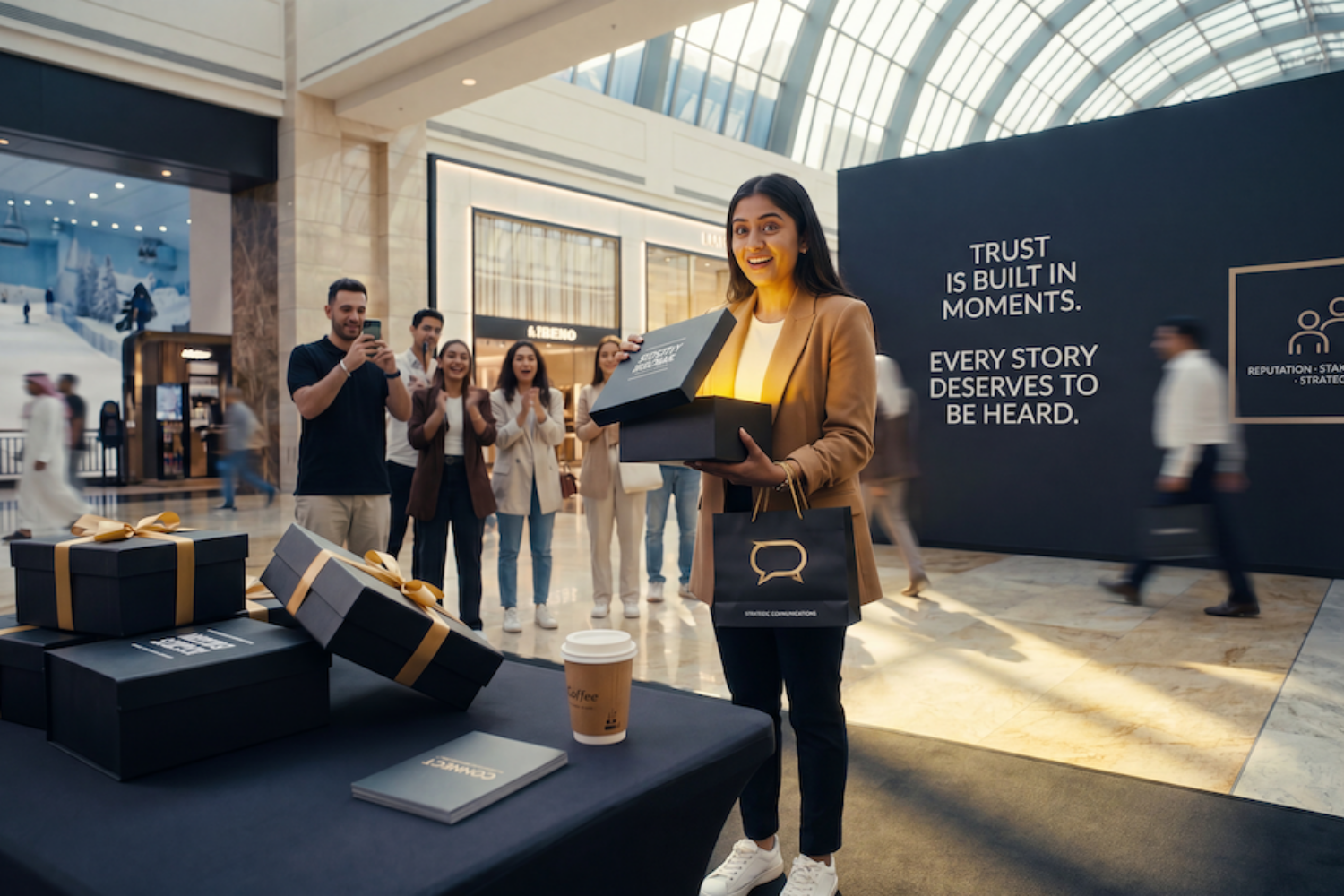
In the US, there’s a golden ticket hidden somewhere in a Five Below store near someone. There might be one inside a Chick-fil-A cup. There’s almost certainly one inside a KPop Demon Hunters trading card pack. And the brands behind these products aren’t doing it because they’re generous. They’re doing it because they’ve discovered something most people haven’t figured out yet: the golden ticket isn’t the product. The content it creates is.
This is the hidden cause behind one of the most effective brand strategies of 2026. And once you see it, you can’t unsee it.
What Is the Golden Ticket Mechanic, and Why Does It Work?
The golden ticket mechanic is a simple idea. A brand releases a blind box — a sealed mystery purchase where the buyer doesn’t know what’s inside. Hidden within the run is one ultra-rare “golden” item, attached to a real-world prize. It could be a $1,000 shopping spree, free food for a year, or a laser-etched collectible card with an individual series number. The odds of finding it are slim. The desire to find it is enormous.
The global blind box market was valued at $13.5 billion in 2024 and is projected to reach $31 billion by 2032, growing at a CAGR of 5.5%. That growth isn’t driven by the toys themselves. It’s driven by the psychological experience of not knowing – and the social experience of sharing the moment of discovery. According to market research, social media unboxing content drives over 60% of viral awareness in the blind box category. The product is almost secondary.
“The golden ticket mechanic doesn’t just create a mystery. It creates a mission. And missions, unlike purchases, generate content.”
How 3 Brands Turned a Simple Idea Into a Content Engine
In May 2026, Five Below launched its Golden Ticket Dumpling series. The brand had already gone viral with its squishy mystery dumplings – hard-to-find, endlessly shareable, and already generating millions of TikTok views. But for this drop, Five Below hid just one golden dumpling across shipments sent to nearly 2,000 stores nationwide. The finder would win a $1,000 shopping spree.
What happened next is the part worth studying. Fans lined up outside stores. Some camped overnight. TikTok filled with videos of people showing off baskets of dumplings, filming unboxings, and documenting their searches. Many of those videos racked up millions of views. The golden dumpling was found in Las Vegas – in just three days. Five Below didn’t need to run a single ad. Its customers did the work.
Chick-fil-A ran a version of the same play as part of its 80th anniversary “Newstalgia” campaign. The brand released blind box collectible cups — one of four retro-inspired designs per box – with 3,000 Golden Fan Caps hidden across the country, each redeemable for free Chick-fil-A for a year. Young customers filmed themselves hunting cups and sharing their reactions. The promotion became content fodder almost immediately, and it worked because Chick-fil-A already ranks second on young Americans’ favourite fast food restaurant list. The brand didn’t have to convince anyone to care. It just gave people who already cared a reason to act.
KPop Demon Hunters – the most-watched title on Netflix – partnered with Asian collectibles company KAYOU to release Pokémon-style trading cards. The Energy Edition includes rare, laser-etched “Golden” cards inspired by the film’s breakout song, individually numbered up to 366 to mark the franchise’s first anniversary. The scarcity is built in. The fandom does the rest. KAYOU’s previous trading card releases have developed strong resale demand, meaning the secondary market amplifies the original launch further.
Three different brands. Three different product categories. One shared mechanic. And in each case, the brand’s customers became its content creators.
What’s the Real Psychology Behind This?
The golden ticket mechanic works because it exploits two of the most powerful forces in human decision-making: the information gap and status signalling.
The information gap, a concept developed by behavioural economist George Loewenstein, describes the discomfort people feel when they know something exists but don’t know what it is. A sealed box with a possible golden prize inside creates exactly this feeling. The gap between “I have a box” and “is this the one?” is irresistible. It’s the same mechanism behind loot boxes in gaming – what researchers call a “variable ratio reinforcement” schedule, the most powerful pattern for sustaining repeated behaviour.
Status signalling explains the social layer. Gen Z doesn’t just buy things – they document buying things. Research on Gen Z consumer behaviour consistently shows that this generation uses purchases to express identity, gain peer approval, and signal cultural awareness. Finding a golden ticket isn’t just lucky. It’s content. It’s proof of participation in a cultural moment. And even not finding it is shareable – the disappointed unboxing video is its own genre.
This is why gamification in retail is growing so fast. Gamification boosts user engagement by 100%–150% compared to traditional approaches, and gamified content is shared 12 times more than non-gamified content. The golden ticket mechanic is gamification at its most elegant: one rule, one prize, infinite content.
The non-obvious lesson from all three examples is this: the mechanic works best when it’s layered onto something people already buy, already talk about, and already feel something about. It’s not a strategy for building an audience from scratch. It’s a strategy for turning an existing audience into a content network.
Why Retailers Should Be Paying Close Attention
What’s happening in the United States isn’t a distant trend. It’s a preview – and the conditions that made it work there are already present in the UAE, specifically in Dubai and Abu Dhabi.
The blind box phenomenon has arrived in the region with force. Labubu figures from Chinese toy company Pop Mart – sold in blind box format – have become one of the most sought-after items in Dubai and Abu Dhabi. Figures initially priced at $28 are being resold at premiums reaching $880, with rare editions fetching as much as $2,500 on secondary marketplaces like StockX. Deliveroo has partnered with consignment stores to release Labubu blind boxes at Dh280 each. Careem has entered the collectibles space, offering surprise Labubu dolls deliverable in under 20 minutes. The Middle East and Africa blind box market was valued at $285 million in 2024, growing at a CAGR of 5.7% – and this is without a single official Pop Mart store in the region. The demand is entirely consumer-led.
- $285M MEA blind box market value, 2024
- 5.7% CAGR growth of MEA blind box market
- 64% UAE Gen Z & millennials who bought via social media in the past year
- 49% UAE social shoppers who involved friends in buying decisions
The social behaviour that powers the golden ticket mechanic is equally well-established in the UAE. 64% of Gen Z and millennials in the UAE secured a purchase via social media in the past year. 49% got their friends involved in the buying stages by sharing pictures and discussing which products to purchase. 54% discovered new products through social platforms. This is a consumer base that is already doing exactly what the golden ticket mechanic is designed to activate – documenting, sharing, and influencing peers through purchases.
The UAE also has a structural advantage that amplifies the mechanic further. Dubai and Abu Dhabi are among the most mall-dense cities in the world, with high footfall, high social media penetration, and a retail calendar anchored by high-engagement cultural moments – Ramadan, Eid, Dubai Shopping Festival, and the back-to-school season – each of which represents a natural launch window for a limited-edition golden ticket promotion. The scarcity mechanic aligns well with the cultural significance of gifting and celebration that defines these periods.
For the UAE’s major retail groups – organisations that collectively operate thousands of stores, manage dozens of brands, and hold loyalty relationships with millions of consumers — the golden ticket mechanic represents a largely untapped opportunity. The brands are already there. The audiences are already engaged. The social infrastructure is already in place.
The brands winning with this mechanic globally aren’t the ones with the biggest prizes. They’re the ones who understood that Gen Z’s most valuable behaviour isn’t buying – it’s sharing. In the UAE, that behaviour is already happening. The golden ticket simply gives it a destination.