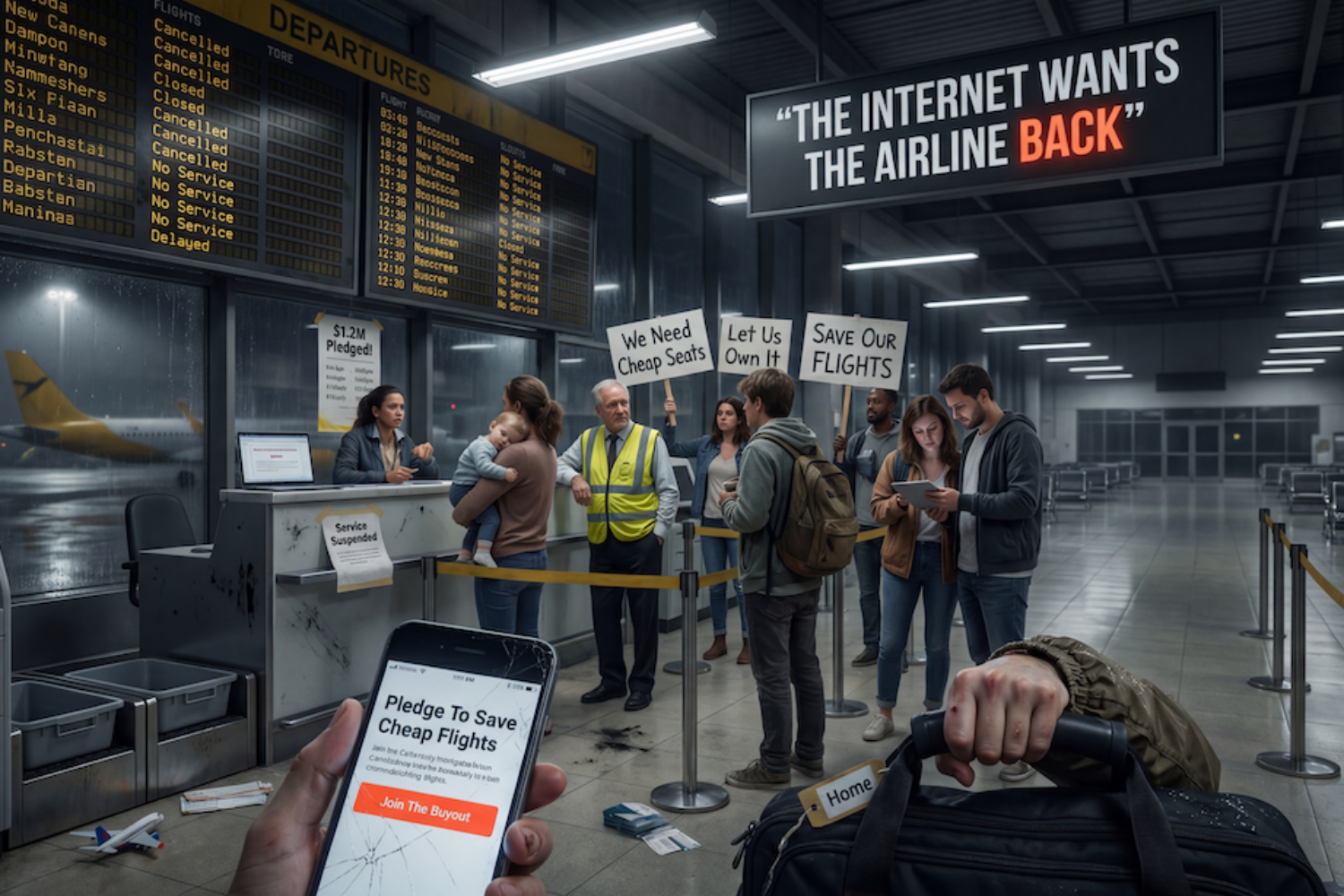
Spirit Airlines was the airline many people mocked. Then it shut down. Suddenly, the jokes changed. A TikTok creator named Hunter Peterson launched a site called LetsBuySpirit and asked people to pledge support for a people-owned revival. Yahoo reported that the campaign reached about $22.8 million in non-binding pledges from more than 36,000 people before the site crashed.
That is the surface story. The better story is bigger. People were not only trying to save yellow planes and cheap seats. They were trying to save a market choice. That is why this angle matters. Brand ownership is becoming more than a business idea. It is becoming a way for people to say, “This brand affects my life, so I want a voice in what happens next.”
Why did people miss Spirit Airlines so fast?
People often do not know what a brand does for them until it is gone. Spirit was not famous for comfort. It was famous for low fares, extra fees, tight seats, and jokes. But those low fares had power. They pushed other airlines to keep some prices lower. They gave some families a chance to fly when other tickets were too high.
That is the part many readers may not know. A cheap brand is not only useful to the people who buy it. It can help the whole market. It acts like a price anchor. If it leaves, the other brands face less pressure. That means fewer choices and, often, higher prices.
So the viral campaign was not just about love for Spirit. It was about fear. People feared losing the messy, cheap option that made the market feel open. That is useful because it changes how we judge budget brands. A brand can be annoying and still be important.
What is the hidden value of a budget brand?
The hidden value is access. Spirit gave people a way to travel when money was tight. It also made bigger airlines answer a simple question: if Spirit can sell a seat for less, why can’t you?
This does not mean every cheap service is good. It means price choice matters. A market with only premium brands can look nicer, but it can also leave many people out. That is why the loss of a budget airline can feel personal even to people who once complained about it.
For brands, this is a clear lesson. Do not only measure love. Measure use. A customer can roll their eyes at you and still need you. A customer can complain online and still defend your role in the market. That kind of bond is strange, but it is real.
Why does brand ownership matter now?
Brand ownership matters because trust in big business is not automatic. People see private equity, mergers, and bankruptcies. They worry that useful brands can be cut up, sold, or changed without the public having a say. The Spirit campaign gave people a different dream. It said the passengers, workers, and communities could have a voice.
Peterson’s early idea was simple. People could pledge money. Each person would get one vote, no matter how much they pledged. Bigger investors could help, but they would not control the vote. He compared the idea to the Green Bay Packers and worker-owned firms.
That idea may be hard to turn into a real airline. But it is powerful as a message. People want brands to feel less distant. They want proof that the people who use a service matter more than the people who only trade it.
Can regular people really buy an airline?
In real life, buying an airline is not simple. It is not like buying a shop. A buyer needs aircraft, staff, safety systems, gates, insurance, and many approvals. A new operator may need a Federal Aviation Administration certificate, which can take years and a lot of money.
That makes the campaign risky if people think pledges equal a finished plan. They do not. Yahoo also noted that the pledges were non-binding and self-reported, so they were not the same as cash in a bank.
Still, the idea has value. It shows demand. It shows that people care about low fares. It shows that a brand can have public meaning even after it fails as a business. That signal can matter to investors, regulators, workers, and rival airlines.
There is also a worker lesson here. When a low-cost airline fails, the story is not only about passengers. It is about pilots, cabin crew, airport teams, and small cities that may lose routes. A public campaign can remind leaders that a company is also a web of jobs and local needs. That makes the idea bigger than nostalgia.
What can other brands learn from this?
Brands should learn that public feeling is not always clean. People may laugh at you. They may complain. They may share memes. But when you stand for something useful, they may still fight for you.
Spirit stood for one main thing: cheap travel. That was clear. Many brands fail because people cannot say what they stand for in one sentence. Spirit had many flaws, but its role was easy to understand. That is why the revival idea spread fast.
The second lesson is that community can form around a problem, not only around love. The problem was simple: if Spirit disappears, cheap flying may get harder. That gave people a reason to act.
The third lesson is that control is becoming part of brand trust. It is no longer enough to ask people to buy. Some people now ask who owns the brand, who makes the rules, and who benefits when the brand wins.
Why is this useful for leaders and marketers?
Leaders should stop seeing customers as only buyers. In some markets, customers are also defenders of access. They may care about the role a brand plays in society, not just the product.
Marketers should also understand the power of a simple public mission. “Owned by the people” is not a full business plan, but it is a strong story. It gives people a part to play. It turns a failed airline into a cause.
That does not mean every brand should become community owned. It means every brand should know what people would lose if it vanished. If the answer is “nothing,” the brand is weak. If the answer is “choice,” “access,” or “fair prices,” the brand has deeper value.
What is the most useful takeaway?
The useful takeaway is this: a brand can be loved for the pressure it puts on a market, not only for the service it gives. Spirit may have been mocked, but it also helped keep the idea of cheap flying alive.
That is why brand ownership became a viral talking point. It gave people a way to protect a market role they did not want to lose. The campaign may never buy an airline. But it has already shown something important. People are starting to think like owners when the brands they need are at risk.
For any company, that is a warning and an opportunity. If your brand gives people access, choice, or savings, say it clearly. If people feel your loss before they praise your product, you may be more valuable than your reviews suggest.