Have you ever stopped to think about why you can remember the exact song playing at your high school prom, but you probably cannot remember a single TV commercial you saw that same year?
There is a very specific reason for that. And it is the exact same reason why one of the biggest teen apparel brands in the world just decided to stop making traditional ads.
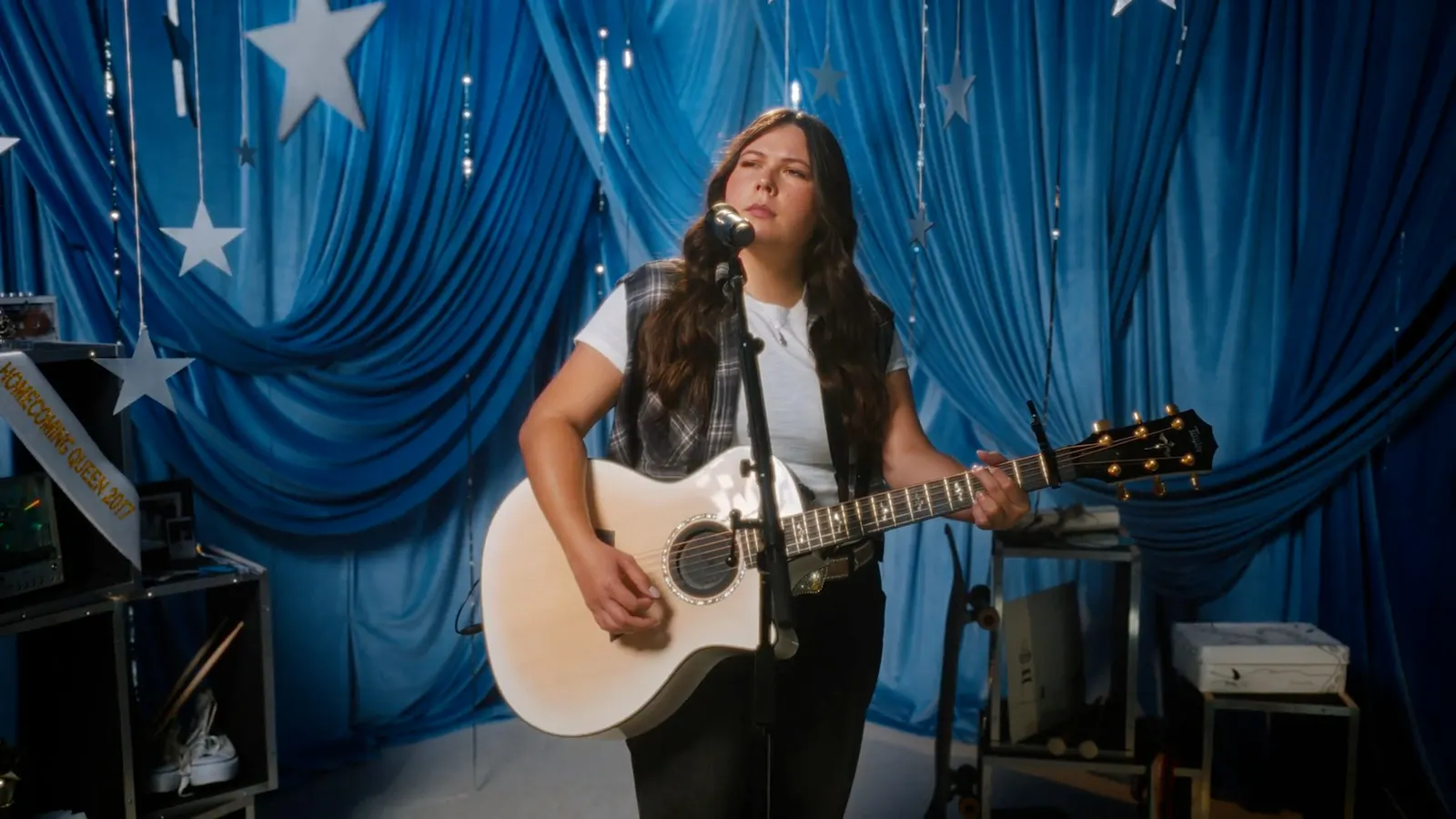
Hollister, the clothing brand owned by Abercrombie and Fitch, recently launched its biggest summer campaign to date. But instead of shooting a standard commercial with models smiling at a camera and a big logo at the end, they did something completely different. They made a genuine music video.
They teamed up with a 26-year-old singer named Gigi Perez, who recently blew up on TikTok. Together, they recorded the first ever officially licensed cover of Green Day’s classic 1997 song Good Riddance (Time of Your Life). The video shows real high school moments. Football games. Homecoming dances. Teenagers hanging out on skateboards and packing up their cars to leave for college.
If you watch the video closely, you will notice something missing. There is no overt branding. There is no big logo flashing on the screen. There is no call to action telling you to buy a pair of jeans or a new summer dress. The clothes are there, but they are just sitting quietly in the background.
This was not an accident. It was a very deliberate choice to move away from traditional ads. And it is a choice that led to a massive 15% growth in net sales for the brand in 2025.
So, why did they do it? And more importantly, what can we learn from their decision to abandon traditional ads? Let us break it down.
Why do traditional ads feel so easy to ignore today?
We live in a world where we are constantly bombarded by information. Every time we look at our phones, someone is trying to sell us something. Because of this, our brains have developed a filter.
When we know someone is trying to sell us something, our brains automatically put up a wall. We become sceptical. We look for the catch. It is a natural defence mechanism. We see traditional ads, and our minds immediately classify them as noise. We scroll past them without even registering what they are about.
But when we encounter something that feels like genuine entertainment, our defences drop. If we hear a song we like or see a story that moves us, we let it in. The emotional impression goes much deeper.
Hollister understood this perfectly. By creating a music video instead of traditional ads, they bypassed the part of the brain that says this is an ad, ignore it. Instead of trying to sell a product, they tried to create a feeling. They wanted to be associated with nostalgia, warmth, and the bittersweet joy of growing up.
There is actual science behind this approach. Studies show that ads evoking nostalgia make 75% of consumers more likely to buy. When a brand connects with you on an emotional level, you stop seeing them as a company trying to take your money. You start seeing them as a part of your life.
They are not trying to win a quick sale with traditional ads. They are trying to win a memory. Because a memory lasts a lot longer than a discount code. And memories do not feel like traditional ads.
How quickly do people actually tune out traditional ads?
The numbers are staggering. Research shows that Gen Z consumers lose active attention for ads after just 1.3 seconds. That is not a typo. 1.3 seconds. Before you have even had a chance to say your brand name, they have already mentally moved on.
This is the world that traditional ads are competing in today. It is not just that people dislike traditional ads. It is that their brains are now physically wired to filter them out before they even register.
This is why the shift away from traditional ads is not just a creative trend. It is a survival strategy. If your content does not earn attention in the first second, it does not matter how much you spent making it.
Why does nostalgia work better than traditional ads for Gen Z?
We usually think of nostalgia as missing something from our own past. We feel nostalgic for the cartoons we watched as kids or the snacks we ate in middle school. But there is a strange thing happening right now, especially with younger people. They are feeling nostalgic for eras they never actually lived through.
Gen Z grew up with social media. On their feeds, a video from 1997 and a video from 2024 can appear right next to each other. Time is flat. So, when a 26-year-old singer covers a punk song from 29 years ago, it does not feel old to a teenager today. It feels current.
This is a massive shift in how we think about marketing. If you want to reach a younger audience, you do not always have to look for the newest trend. Sometimes, you need to look backward. You need to figure out what feeling they are trying to recreate, even if they never experienced the original version of it.
Research shows that 68% of Gen Z feel positively toward nostalgic branding, and that nostalgic content generates a 2x higher emotional response rate compared to standard content. Hollister saw this happening. They saw their own customers pinning physical photos to their walls and keeping concert wristbands. They realised that young people are craving things that feel real, tactile, and permanent in a very digital world.
Traditional ads usually focus on what is new and shiny. But Hollister realised that their audience wanted something that felt timeless. By tapping into this deep desire for nostalgia, they created a connection that traditional ads could never achieve. They made their audience feel seen and understood.
What is the reminiscence bump and why should every brand know about it?
Psychologists have a name for the reason why teenage memories feel so powerful. They call it the reminiscence bump. Research shows that the memories we form between the ages of roughly 10 and 30 are the ones we remember most clearly for the rest of our lives. This is the period when we are forming our identity, experiencing things for the first time, and building the emotional foundation of who we are.
Music is one of the most powerful triggers for these memories. A study published in Frontiers in Psychology found that music heard during this critical window of adolescence creates some of the most emotionally charged and long-lasting memories a person will ever have.
Hollister is not just selling clothes. They are trying to become part of that memory window. They want to be the brand that a 35-year-old looks back on and thinks, that was the brand I wore when everything felt possible. That is a level of loyalty that traditional ads simply cannot manufacture.
Why is exclusivity so powerful compared to traditional ads?
Most brands approach partnerships by asking a simple question. They ask, who is popular right now? They find whoever has the most followers and pay them to star in their traditional ads.
Hollister asked a different question. They asked, what can we do that has never been done before?
Green Day is a massive band. Their song Good Riddance is an absolute classic. And until now, they had never allowed another artist to officially cover it for a brand partnership. Hollister managed to get that exclusive right.
That changes everything. It takes the campaign from being just another set of traditional ads and turns it into a cultural event. It becomes something newsworthy.
When something is genuinely scarce or the first of its kind, people pay attention. We value things more when they are hard to get or unique. By securing an exclusive piece of music history, Hollister made sure their campaign stood out in a sea of endless content.
Think about how many traditional ads you see every single day. Hundreds. Maybe thousands. They all blend together into one big blur. But you only see the first-ever official cover of a classic song once. Exclusivity creates a level of interest and excitement that traditional ads simply cannot buy. It makes people feel like they are part of a special moment.
What happens when creators step out of traditional ads and into the story?
There is another interesting layer to this campaign. Hollister has a group of creators they work with, called the Hollister Style Hub. Normally, brands use creators just to post pictures of products and share discount links. It is a very transactional relationship. It is just another form of traditional ads.
But Hollister did something different. They actually cast these creators as talent in the music video itself.
This is a subtle but important shift. There is a big difference between a creator promoting a brand in traditional ads and a creator actually being part of the brand’s story. When creators are integrated into the story, it feels much more authentic. It does not look like traditional ads. It looks like a group of friends making something together.
And authenticity is exactly what audiences are looking for today. They are tired of being sold to. They are tired of traditional ads that feel fake and forced. They want to see real people doing real things.
By bringing their creators into the actual content, Hollister showed that they value these people as more than just human billboards. They value them as collaborators. Studies show that branded content is twice as memorable as display advertising. This proves that the brand is willing to invest in real relationships instead of just paying for traditional ads.
Are you still making traditional ads or are you making memories?
The lesson here is simple but profound. People remember how you made them feel far longer than they remember what you sold them.
Music plays a huge role in this. Research shows that music bypasses the analytical parts of our brain and connects directly to our emotional and memory networks. This is why a song can take you back to a specific moment in your life in an instant. It is not just a sound. It is a time machine.
Hollister knows this. They know that if they can weave their brand into the emotional memories of a teenager, they do not need to keep pushing traditional ads at them. They just need to be there. They want to be the label on the dress that someone keeps in the back of their closet for a decade.
That is a fundamentally different goal than trying to get a click on a website. And it requires a fundamentally different approach than making traditional ads.
When you focus on creating memories instead of traditional ads, you change the entire dynamic between your brand and your audience. You stop being a nuisance that interrupts their day. You become a welcome part of their life.
This is why moving away from traditional ads was such a smart move for Hollister. They stopped fighting for attention and started earning it. They stopped trying to convince people to buy clothes and started giving them a reason to love the brand.
Traditional ads will always have a place in the world. But they are no longer the only way, or even the best way, to build a brand that people genuinely care about. The companies that win in the future will be the ones that figure out how to step outside the boundaries of traditional ads. They will be the ones that create art, tell stories, and build genuine emotional connections.
Just like Hollister did. They proved that sometimes, the best way to sell more is to stop making traditional ads altogether. They proved that when you focus on the feeling, the sales will follow.
Traditional ads tell you what to buy. Great stories tell you how to feel. And in a world full of traditional ads, the brands that make you feel something are the ones you never forget.
Joshua Mathias is among the top PR Agencies in Dubai and works with businesses across the GCC region, including Saudi Arabia, Abu Dhabi, and the wider Middle East, helping them build brands, manage reputations, and connect with audiences.
Learn more at joshuamathias.com