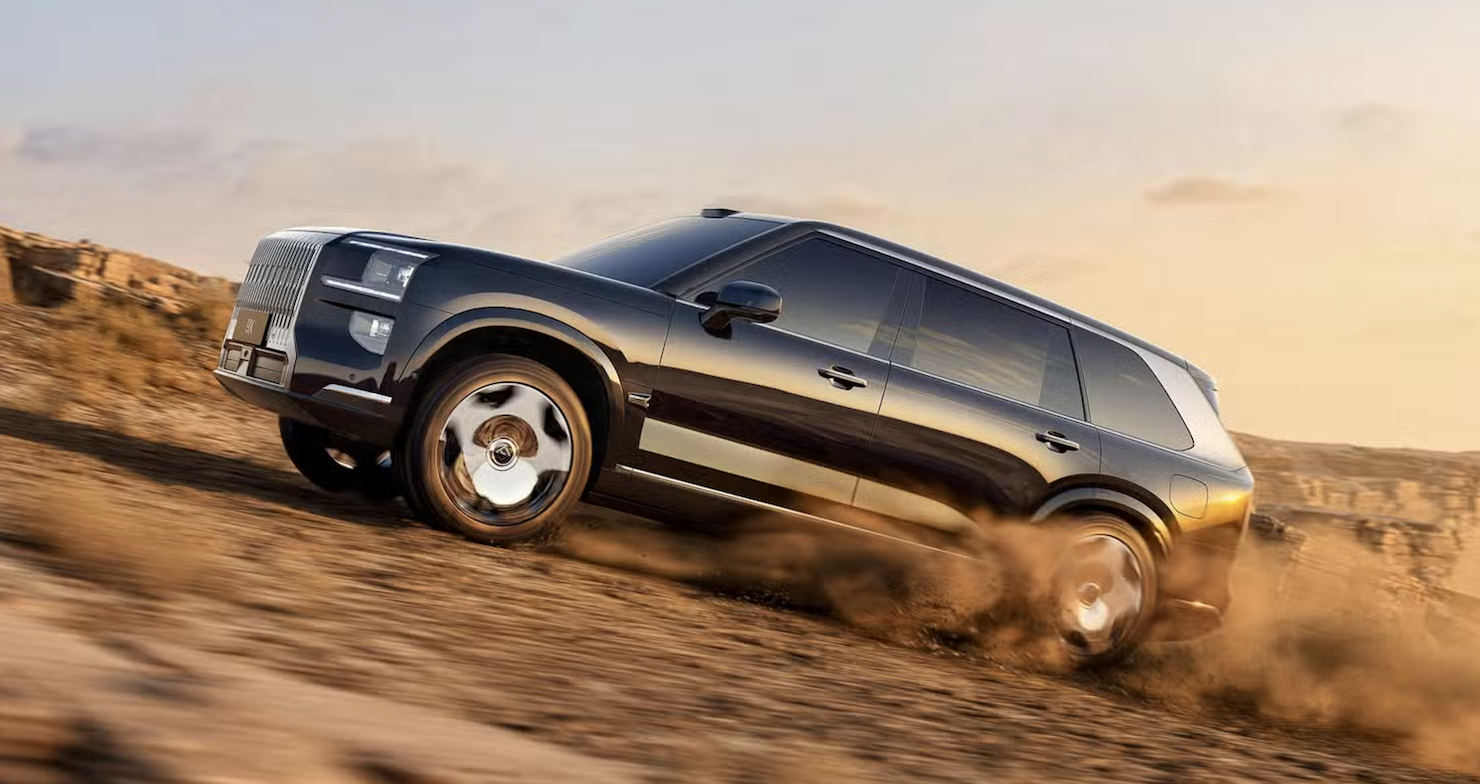
The Zeekr 9X is not interesting because it is another large, expensive SUV. It is interesting because it makes the luxury SUV category feel unsettled again. For years, the formula was relatively easy to understand: a luxury SUV needed presence, comfort, refinement, a prestigious badge, and the kind of brand story that made the owner feel they had arrived before the vehicle even moved. That formula still matters, and it would be foolish to pretend otherwise. Range Rover, Bentley, Mercedes-Benz, BMW, Audi, Lexus, Porsche, and Rolls-Royce have spent decades building trust, symbolism, design memory, and emotional authority.
But Zeekr is asking a different question with the 9X. What if modern luxury is no longer defined only by heritage, craftsmanship, and status? What if luxury also means how much capability a vehicle can deliver at once: performance, comfort, intelligence, electric range, charging speed, passenger experience, and usability? That is where the 9X becomes more than a car. It becomes a signal.
Zeekr is not copying the old luxury playbook
The lazy framing would be to call the Zeekr 9X a “Range Rover killer” or a “Bentley rival.” That may get attention, but it misses the bigger point. Zeekr is not simply trying to imitate the old luxury hierarchy. It is trying to compete on a new one.
Officially, the Zeekr 9X is positioned as the brand’s flagship luxury SUV, with a six-seat layout, a high-voltage hybrid architecture, long electric-only range, and performance figures that sound almost absurd for a family-sized vehicle. Zeekr says the 9X can produce up to 1,000 kW and accelerate from 0–100 km/h in 3.1 seconds, while also offering up to 380 km of CLTC electric range and 20–80% charging in around 8.5 minutes on suitable infrastructure.
Those numbers are not just impressive. They are slightly disorientating. A six-seat luxury SUV is supposed to be comfortable, spacious, and refined. It is not supposed to accelerate like a supercar, behave like an EV for daily commuting, and still offer long-distance flexibility through a hybrid system. That is why the 9X creates such a strong reaction. It challenges the mental model people have for what a luxury SUV is allowed to be.
The new luxury is capability density
The best way to understand the Zeekr 9X is through the idea of capability density. In simple terms, this means how many meaningful jobs one vehicle can perform at a high level. The 9X is not just trying to be fast. It is trying to be fast, comfortable, intelligent, family-friendly, chauffeur-friendly, road-trip-friendly, and technology-rich at the same time.
That matters because luxury buyers are changing. The traditional luxury customer still values brand reputation, design, materials, and ownership confidence. But the new premium buyer increasingly expects a vehicle to behave like several products in one. It should feel like a performance car when required, a business-class lounge when sitting in the back, a smart device when interacting with software, an EV during daily driving, and a family SUV when life demands practicality.
This is where Zeekr looks particularly sharp. The 9X does not ask buyers to choose between drama and usefulness. It tries to combine both. That combination is what makes it feel modern.
The back seat may be the new battleground
One of the most interesting things about the 9X is that its story is not only about the driver. Much of its appeal sits behind the front row. Zeekr highlights a three-row six-seat cabin, lounge-style seating, high-end audio, large screens, premium comfort features, and a strong focus on the passenger experience. Independent reviews have also drawn attention to the second-row captain’s chairs, recline functions, massage, heating, cooling, and business-class feel.
This is important because the luxury SUV war is moving beyond horsepower. In China especially, large six-seat SUVs have become a serious premium segment. The success of models such as the Li L9 helped prove that buyers wanted family-focused flagship SUVs, and the segment has since attracted major competitors including AITO, NIO, and Zeekr.
In that context, Zeekr’s strength is not only that it makes the 9X powerful. It is that it understands the passenger may be the real customer. For many families and executives, the most luxurious seat in the car is not necessarily the driver’s seat. It is the seat where someone can relax, work, watch, talk, sleep, or arrive feeling better than when they left.
Hybrid is being reframed as freedom, not compromise
The 9X also arrives at a time when the electric vehicle conversation is becoming more nuanced. For years, hybrids were often treated as a temporary step between combustion and full electric vehicles. The Zeekr 9X suggests a different interpretation. In the luxury space, a sophisticated plug-in hybrid or extended-range setup can be positioned as freedom: electric driving for daily use, fast charging when available, and fuel-backed confidence for longer journeys.
That is not a fringe idea. The International Energy Agency reported that China remains the world’s largest electric car market and that plug-in hybrids and extended-range electric vehicles have grown significantly as part of China’s electric vehicle mix. In other words, vehicles like the 9X are not just technical curiosities. They reflect a real customer appetite for flexibility.
This is why the Zeekr 9X feels commercially intelligent. It does not force the buyer into a purity contest. It solves anxiety. For a luxury customer, that may be one of the most valuable features of all.
Why this makes Zeekr look good
The most impressive thing about the 9X is not any single specification. It is the confidence of the product definition. Zeekr appears to understand that the next phase of luxury will not be won by badge alone, but also by how convincingly a brand can combine emotion, technology, performance, comfort, and convenience.
That does not mean traditional luxury brands are suddenly weak. They still have powerful advantages: heritage, trust, craftsmanship, resale confidence, dealer networks, and cultural meaning. But Zeekr has done something very clever. It has made the conversation more difficult for everyone else. If a relatively young luxury brand can offer this much performance, this much comfort, and this much technology in one package, then established brands have to explain not only why they are prestigious, but why they are still moving the category forward.
That is a healthy challenge. It pushes every brand to improve.
The bigger question
The Zeekr 9X should not be seen as proof that one brand has defeated another. That is too simplistic. Its real significance is that it shows luxury SUVs entering a new era, where heritage and capability must coexist.
The future winners will not simply be the brands with the oldest stories or the longest spec sheets. They will be the brands that make people feel something and give them something genuinely useful. Zeekr has made the 9X interesting because it does both. It delivers the shock value people want to talk about, but underneath that shock is a serious idea: luxury is becoming more measurable, more functional, and more technologically ambitious.
That is why the Zeekr 9X matters. It does not just ask whether Zeekr can compete with established luxury brands. It asks whether the definition of luxury itself is changing.
And right now, Zeekr looks like one of the brands brave enough to answer that question first.